

The most critical elements of transportation in the United States are road safety. The government and traffic authorities also stress that driving responsibly and following the traffic regulations are critical concerns with millions of vehicles driven daily over the highways, city streets, and rural roads. Existing road safety regulations are formulated to minimize accidents, secure lives, and to maintain a traffic flow. And regardless of whether you are a first-time driver, a tourist, or an experienced commuter, it is necessary to have a grasp of these regulations and comply with them.
Appreciating the Essentials of Road Safety
In the United States, speeding, distracted driving, impaired driving, and non-observance of traffic rules are the main causes of the deaths of thousands of people every year on American roads. Road safety regulations aim at enforcing laws, as well as, establishing awareness of the significance of safety behavior at the road. The U.S. Department of Transportation (DOT) and the National Highway Traffic Safety Administration (NHTSA) are in the forefront to establish standards and institute programs that enhance the safety of traffic. These agencies intervene to enforce the use of seat belts among other requirements such as speed control and regulation of vehicle safety to provide the maximum number of road users with security.
The relevance of Seat Belt Laws
The most simple but important road safety law in the United States is the use of seat belts which is mandatory. All states except New Hampshire have mandated the use of seat belts by drivers and passengers and this might lead to fines in case they fail to use them. NHTSA estimates that using a seat belt helps to decrease the percentage of fatal injury by almost 45 percent among front-seat occupants. Thousands of lives are saved each year by the use of seat belts that allow the passengers to avoid being ejected in case of a collision or banging into interior surfaces that are hard. The drivers must also take care to ensure that the children are strapped in the car seats or booster seats depending on their age and weight.
Do your car often require maintenance? How to Save Money on These 4 DIY Car Repairs
Road Rushing and Considerate Driving
Speeding is among the leading causes of road accidents in the United States. The speed limits are determined by the state depending on the road conditions, population density and the kind of traffic present in the state. The maximum speed in most cities is between 25 and 45 miles per hour, whereas on highways, it may be between 65 and 75 miles per hour, and in some rural interstates, even 80 miles per hour. Drivers must adhere to the speed limits that are posted and must slow their speed based on weather, visibility, and traffic volume. Excessive speed while driving decreases the reaction time and the intensity of accidents, thus becoming a major safety problem in the country.
Traffic Signals and Rules of the Road
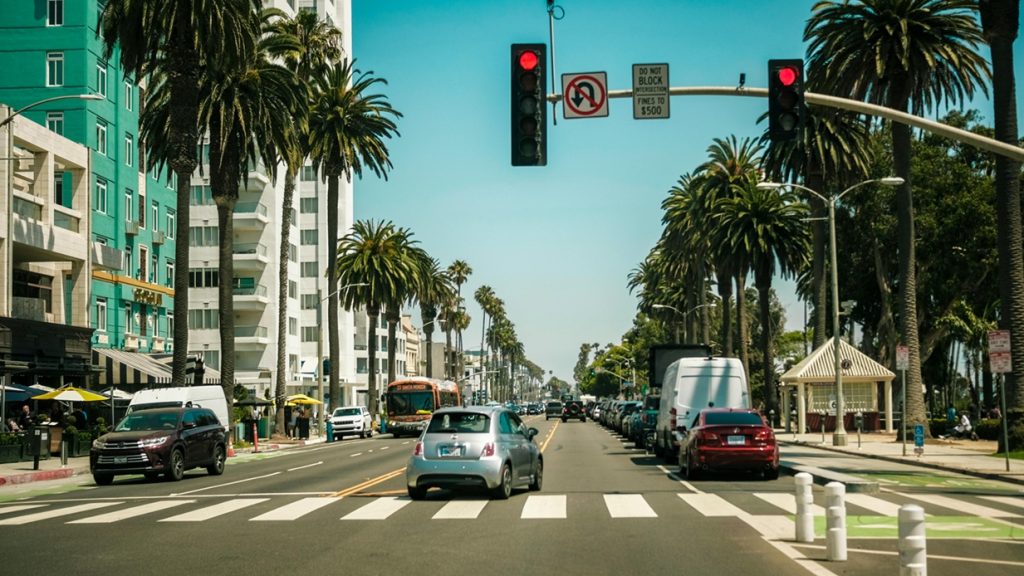
Traffic lights, red lights, and road signs are meant to ensure orderliness on the roads. The drivers should never overrun the red lights; be cautious when they are yellow, and go when they are green and safely. Disobedience to traffic lights is a severe crime and the primary reason behind intersection accidents. Traffic flow in the U.S is predictable and fair due to the rules surrounding the right-of-way. As an example, cars doing a left turn should give way to the passing traffic and at the four way stops the first passing motor vehicle is allowed to pass first. Cross pretty pedestrians should always be given right-of-way at crosswalks and should be given way by drivers even when they suddenly step on the road.
How to avoid Distracted Driving
The issue of distracted driving is a significant issue of the recent years, and its popularity has increased with the prevalence of smartphones. Communicating either through texting, calling, or applications whilst driving greatly exposes one to the danger of road accidents. Numerous states have come up with a stringent hands-free legislation that does not allow drivers to have or use a phone when driving. Even eating, turning on the radio, and talking to passengers may distract the road. The most secure option would be to concentrate on driving completely and stop when something has to be done urgently. One of the best ways of avoiding accidents and saving lives is to be alert.
Driving Under the Influence Laws
Drunken driving or driving under the influence is one of the most severe crimes in the U.S. Most states have legal blood alcohol concentration (BAC) of 0.08 per cent among regular drivers and 0.04 per cent among commercial drivers. All drivers who are below 21 years of age regardless of the quantity of the alcohol that is detected can be punished according to the laws of zero tolerance. Sobriety checkpoints are done frequently by police departments to detract drunk driving. The punishment may be heavy fines, suspension of a license, compulsory training courses, and even imprisonment. Laws have now been extended in the recent years to cover impairment due to the use of marijuana or prescription drugs.
Pedestrian Safety and School Zones
School areas must have additional care. School related speed limits are often slowed when schools are in session to 15-25 mph, and school buses offloading or loading children must be obeyed by drivers. Any person passing by a stopped school bus that is flashing red lights commits an offence punishable by extreme measures. The other significant area of concern in the U.S. is pedestrian safety because the number of accidents involving walkers and cyclists has been increasing. Drivers are expected to be accommodating at the cross walk, not to block intersections, and also to be on watch in places where people walk a lot or around parks and playgrounds.
Helmet and Motorcycle Safety Usage
The riders of the motor cycles are more exposed and vulnerable to the road. The laws related to helmet wearing differ by state- some states enforce helmet wearing on all riders and some states enforce it on only the minors. Nevertheless, the helmet is a significant protection that significantly lowers chances of being hit on the head or dying in an accident. Besides helmets, riders are also advised to use protective equipment like gloves, boots, jackets, and many more. The riders of motorcycles are also advised to make themselves noticeable through reflective clothes and proper lane positioning.
Awareness and Defensive Driving
Defensive driving entails foresight of any occurrences that may cause accidents and responding in a manner that avoids the occurrence of accidents. These involve maintaining a safe spacing with other vehicles, frequent use of mirrors, early signalling and avoiding aggressive driving. Other weather conditions that a driver ought to be aware of include fog, rain or snow that may affect the visibility of the driver and cause the road to become slippery. Under these circumstances, slackening and gaining momentum after distance is important. Defensive driving courses provided by many insurance companies and schools of driving are not only skills enhancing but also insurance-saving courses.
Emergency Vehicles and Move Over Laws
All motor operators in the United States are expected to give way to the emergency vehicles which include the police cars, ambulances and fire trucks in case they are on the sirens or flashing lights. The Move Over Law is a law that requires motorists to move to other lanes or reduce speed when passing by an emergency or service vehicle stopped on the roadside. The rule secures first responders and employees against being hit by any object during their work. Violation of the move-over law may attract sentences such as heavy fines and license points.
The Role of Modern Technology in Road Safety
Use of modern technology is increasingly being used to enhance the safety of the roads in the United States. Automatic emergency braking, lane departure systems, adaptive cruise, and blind spot assist systems are now common in most new models. The systems help the driver by minimizing human error as this is a major cause of crashes. Also, awareness campaigns and road signs are used online to remind drivers to use seat belts, not distract, and drive under the influence of alcohol. The use of technology in collaboration with driver education is likely to ensure the American roads are even safer in the coming years.
The safety of the road in the United States is based on the complex of the presence of definite laws, the behavior of responsible drivers, and awareness of the population. Adhering to traffic regulations, using seat belts, not being distracted, hospitality of speed limit, and never driving when one is intoxicated are basic measures of keeping safe. It is the duty of every motorist to ensure he or she takes care of others and himself or herself on the road. We can also help to make the highways and streets of the country safer by simply being watchful, polite and law-abiding and thereby ensuring that accidents are minimized and that the roads are made safer by all.