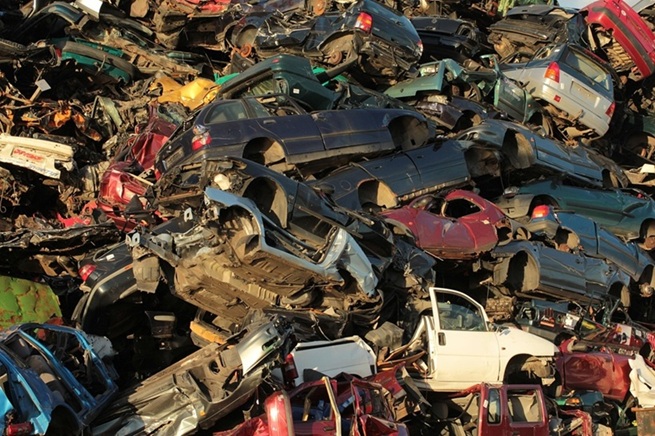
When your car is at the end of its life, it is not a waste until it goes to the landfill. Actually, automobiles are one of the products that are highly recycled globally. That wrecked out not-working car in your driveway is about to start a remarkable ride- one that can turn it into a sight sore to behold but raw materials worth billions in value that will be re-purposed into new cars, into appliances, into buildings, and more.
We are glad to be involved in this interesting process at Atlanta Auto Recycle. The United States alone recycles millions of vehicles each year and it is a more complex and more important process than many people may think.
We shall give you a behind-the-scenes view of the very way of how junk cars are recycled and where your old car goes after it leaves your possession.
Modifying the score should rely on the ARA score, which provides the criteria for assessing the child’s deficits and pollutants (Mowday, 2012).
Step 1: Assessment and Depollution.
The process will start when your car will be transported by a licensed recycling center such as Atlanta Auto Recycle. However, prior to any kind of recycling, there is a need to prepare the vehicle thoroughly.
The initial leading step: securing it
Once a vehicle arrives, the first consideration is on the elimination of all the things that may be harmful to the environment or to the human beings who are processing the vehicle. This is known as depollution and it is among the most significant aspects of the whole recycling exercise.
What will be extracted in the process of depollution:
- Battery: Car batteries have lead and acid and they should be handled separately.
- Fluids: Engine oil, transmission oil, coolant, brake oil and windshield washer oil are all emptied.
- Fuel: Any left fuel (gasoline or diesel) is taken good care of.
- Mercury switches: These were used in some old cars, and are removed so that they do not cause contamination.
- Tires: These are removed and referred to the tire recyclers.
- Refrigerant: The refrigerant of the AC system is taken away with the help of special equipment.
These liquids and substances are not wasteful. They are also recycled – oil may be re-refined, antifreeze may be reused and recycled, and batteries may be reused to extract the lead and plastic.
Step 2: Parts Collections and Recycle
After depolluting the car, the second thing that follows is to find out which parts it has life left in them. The junk of one individual can be the treasure of another individual and various parts of a junk car can be reused and sold thus they never get into the waste stream at all.
Useful components, which receive a second life:
- Engines and transmissions: In a good condition, they are removed, prepared and sold as used parts.
- Alternators and starters: These can be rebuilt and re-sold.
- Doors, body parts, fenders: Body parts that are in good condition and correct color are always sought after.
- Electronics: ECUs, radios, sensors, and modules may be useful to be repaired.
- Catalytic converters: These are made of precious metals such as platinum, palladium and rhodium thus being very valuable to recycle.
- Seats and interior pieces: Interiors can be sold to restorers or repair shops in case they are clean and in good condition.
It is this stage of harvesting that makes the recycled parts available at significantly lower prices than the new ones – and why selecting used parts is a cost-effective and green choice.
Step 3: Separation and Shredding
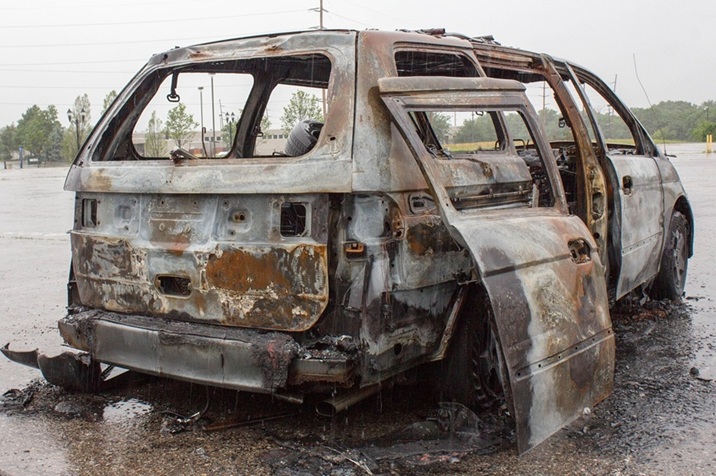
Once all the reusable parts have been taken that which remains is the vehicle body, mostly steel and other metals. And here the actual change is initiated.
The shell that is left gets loaded into a conveyor belt and is sent into an industrial auto shredder. These machines are gigantic and within a minute, they can chew up a complete car. The shredder cuts the vehicle to fist-sized pieces of mixed materials with high speed rotating hammers.
Out of the shredder, what emerges:
- Metals made of ferrous (steel and iron).
- Non-ferrous non-metal (liquid, solid, gaseous, or gas), i.e. non-metal and metal.
- Plastics, foam, glass, rubber, dirt Residue of the shredder.
But the job isn’t done yet. The next step is to remove all such materials to be shipped to the appropriate recycling facilities.
Step 4: Sifting of advanced materials
The stack of scrap stuff goes through a sequence of advanced separation operations. It is in this place that science and technology bring order in the world of chaos.
How materials are sorted:
The magnetic separation: Strong magnets are used to extract the ferrous metals (steel and iron). These comprise the larger part of the weight of the vehicle and they go to the steel mills where they are melted and recycled into other products.
Separating by Eddy current: It is a technology that employs magnetic fields to repel non-ferrous metal such as aluminum and copper. wheels and engine blocks Aluminum is especially valuable.
Density separation: The water or air currents are used to sort the materials based on their weight. Light material such as foam and plastic is floating and heavy metal is sinking.
Manual sorting: In certain plants, employees of the plant pick certain materials manually in order to gain purity.
The result? Pure, segregated streams of recyclable materials and off to their second existence.
Step 5: Manufacturing and Melting.
The last stage in the journey involves the separated materials to processors who convert them into raw materials of new products.
Where your car’s materials go:
In electric arc furnaces steel and iron are melted down and are rolled to fresh sheet metal-so to speak-and back into the automotive industry. Indeed, a significant part of the steel in a new car is that of recycled cars.
Aluminum is melted and poured into a new engine block, new wheels or even a can of drinks.
Copper is refined and is utilized in the wiring system, motors and electronics.
Shredder residues are also plastics that are slowly being reused in the manufacture of such products as auto parts, construction materials, and packaging.
This is a closed loop system which implies that your old car is literally transformed into raw material of cars in the future.
Why Auto Recycling Matters
The business of recycling old cars is not only a matter of making money out of old cars, but it is also one of the industries that have the most environmental implication in the world.
The environmental impact:
Saving of energy: Recycling steel requires 74 percent less energy when compared to the production of steel using virgin iron ore.
Conservation of resources: 1 ton of recycled steel saves 2,500 pounds of iron ore, 1,400 pounds of coal and 120 pounds of limestone.
Reduction of landfills: More than 95 percent of end-of-life cars are recycled so that cars are the most recycled consumer products in America.
Reduction of pollution: Recycling will ensure that hazardous fluids and materials do not pollute soil and water.
What You Must Know as an Owner of a Car
When you have a junk car, knowing how the recycling works may make you sure that you are doing the right thing to your wallet and the planet.
In selecting any professional recycler:
- You make sure that hazardous material is dealt with safely.
- You do worthy parts, an opportunity of a second life.
- You are part of the cyclical economy that minimizes mining and manufacturing effects.
- You receive compensation in terms of what your car can fetch.
The recyclers do not work to identical standards. It is why it is important to select a well-known place such as Atlanta Auto Recycle. We adhere to all environmental guidelines and reuse as much reusable as possible and have your old car recycled properly.
Willing to Recycle your Junk Car?
Your car is on its way to an amazing trip-one that will turn it into raw materials to the future world. All this begins with a single action, which is to contact a professional recycler.
Atlanta Auto Recycle, this is easy. We will provide a fair offer of cash, do all documents, and do towing. You earn and your car is given a new life.
We are offering you a free quote. Make your old car work to benefit the planet -and get cash in your pocket.